Before there were clinices, there were horses
In ancient Greece, physicians prescribed riding for peace and balance. After both World Wars, horses were used to bring soldiers back from trauma.
In villages across India, a child who couldn’t emotionally regulate would be put on a bullock cart or a tonga – the rhythm would settle him.
Then we built clinics. White rooms. Fluorescent lights. We forgot the oldest regulator we had – our own nervous system.
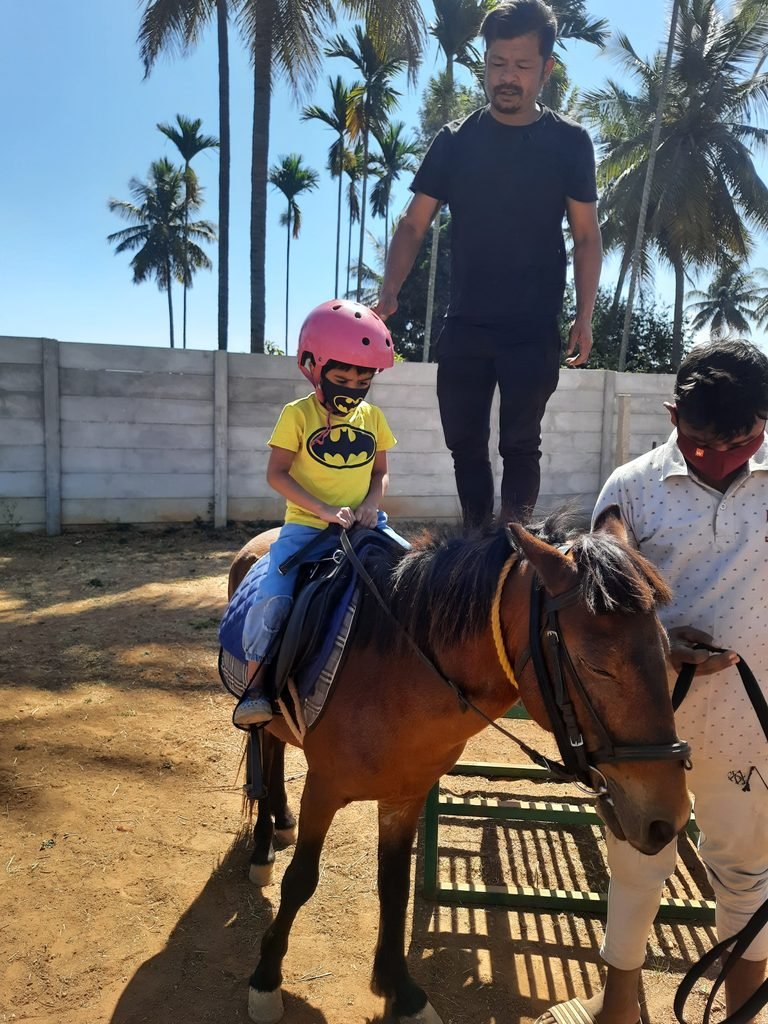
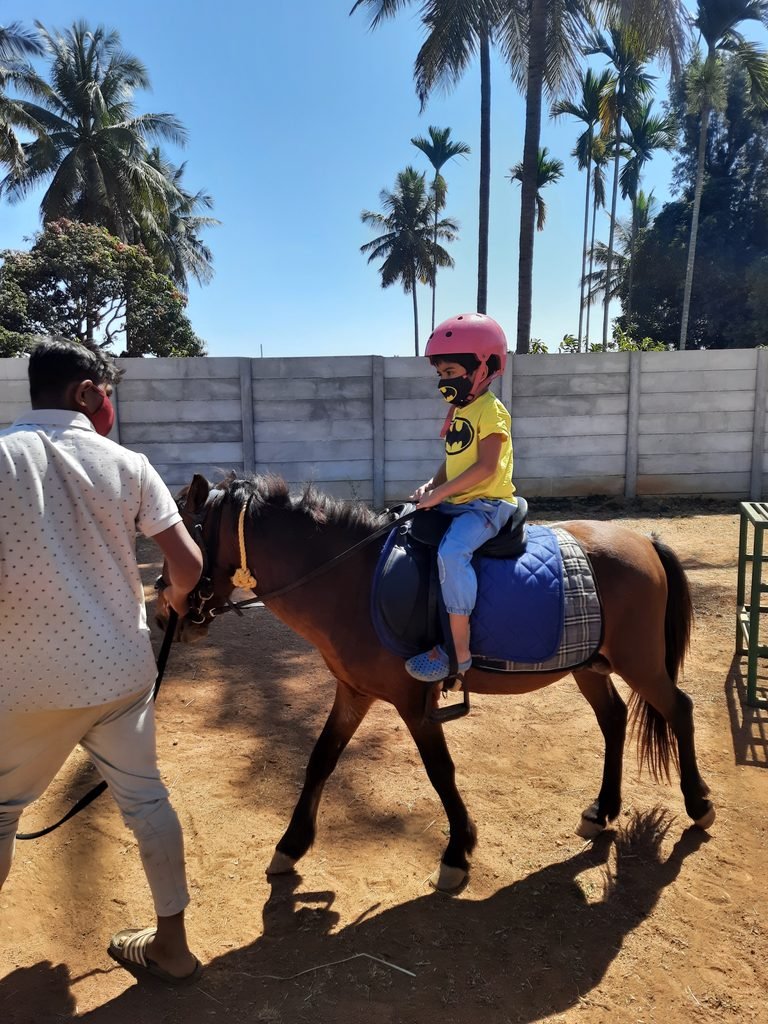
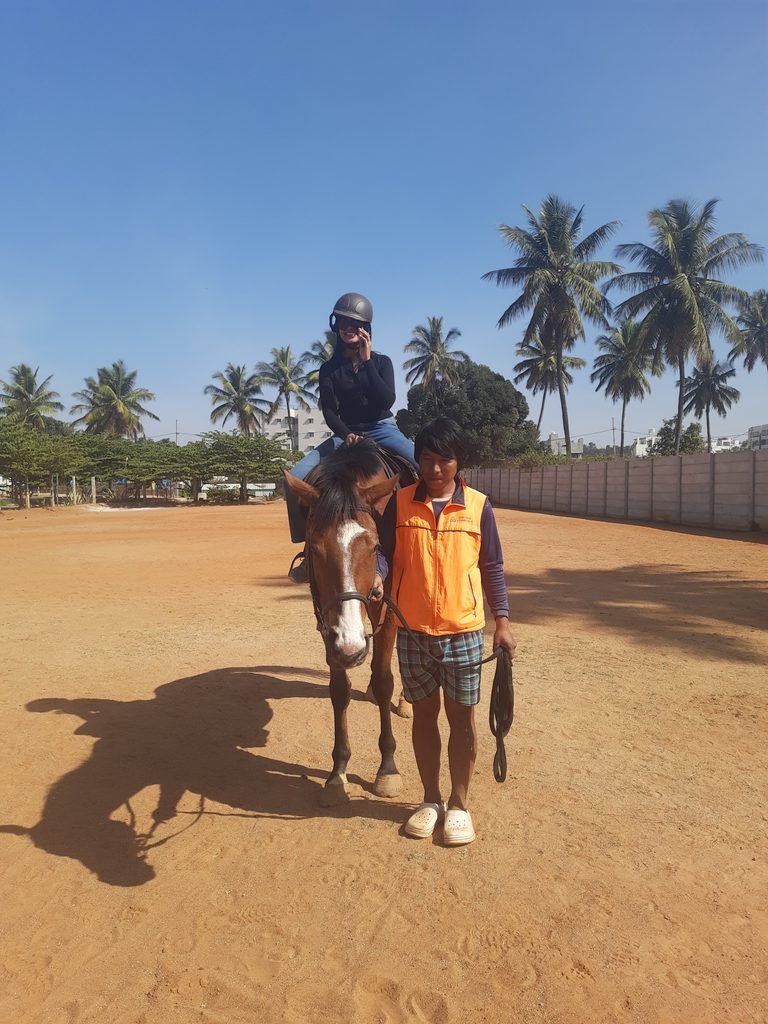
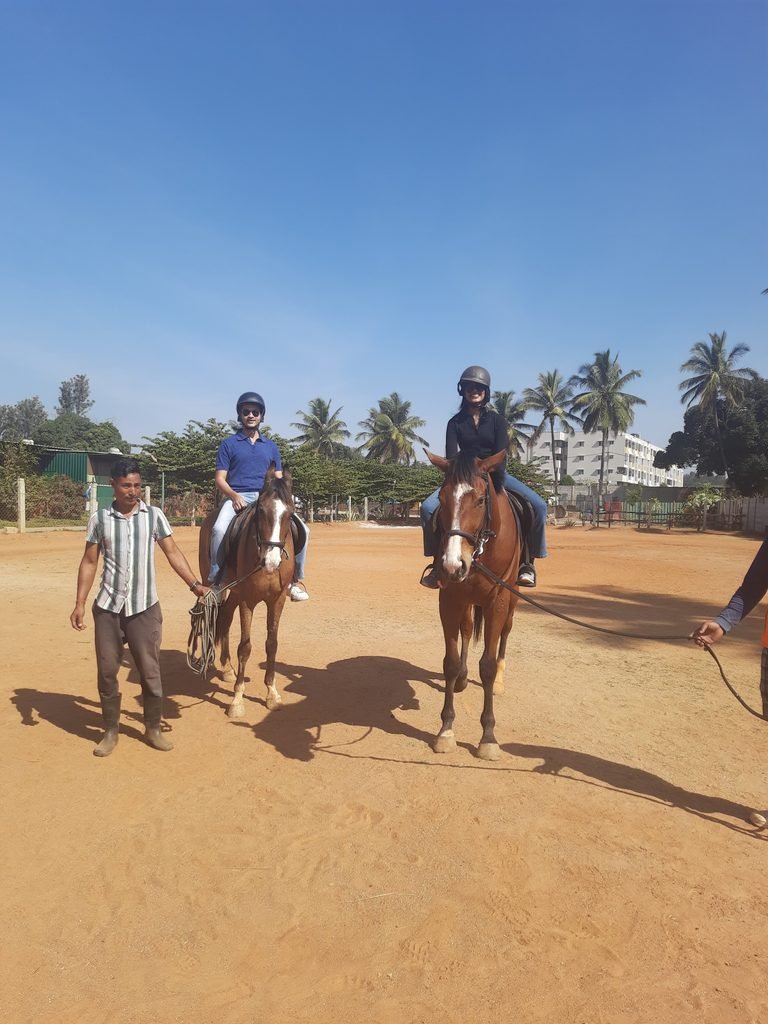
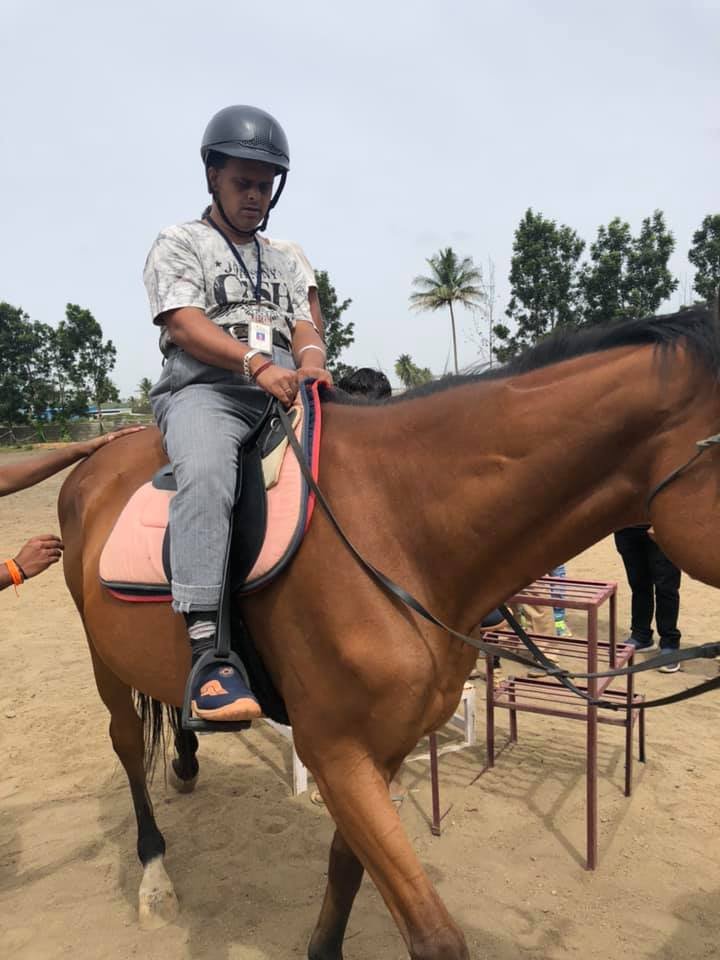
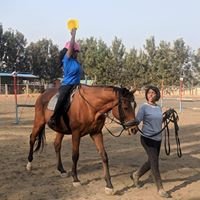
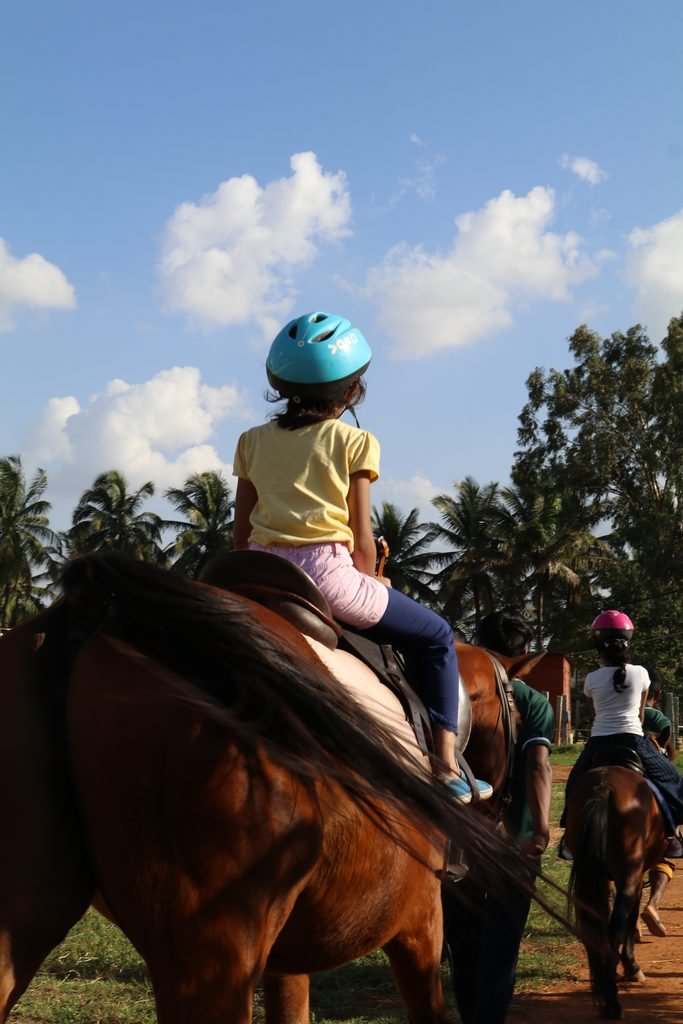
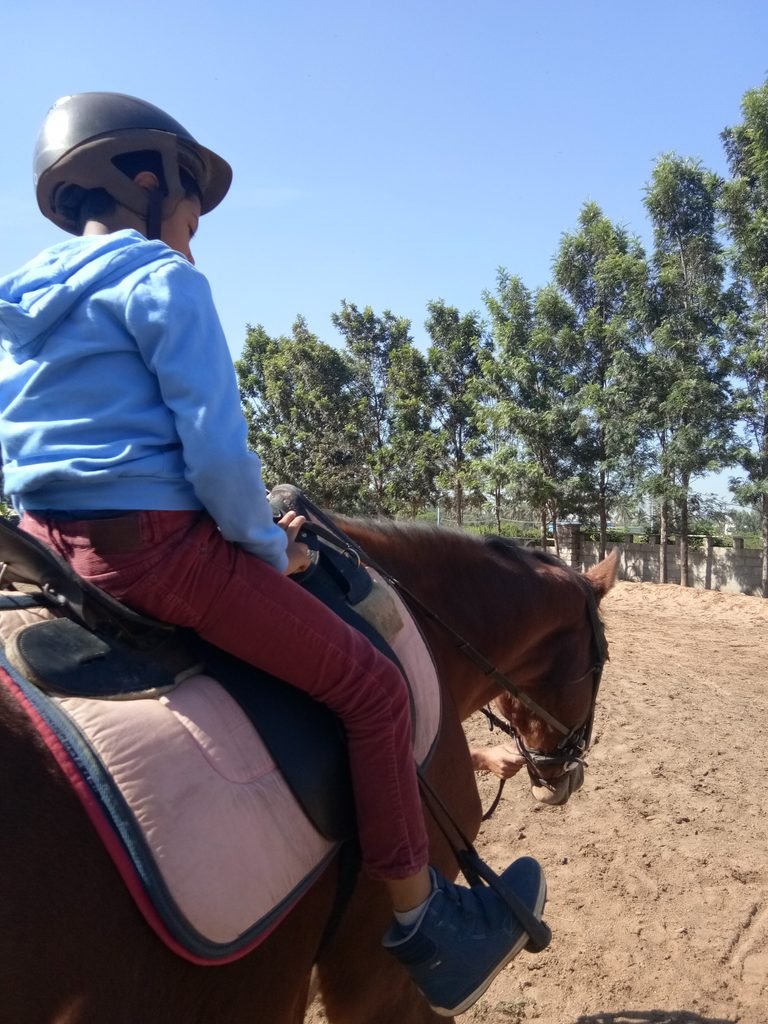
At MEC, our form of therapy with horses helps us return to what we moved away from. We work with special needs individuals / neurodivergent individuals and their families to help individuals improve cognition, balance, emotional regulation, restore posture, and build confidence through Therapeutic Horse Riding, also called Equine Assisted Therapy.
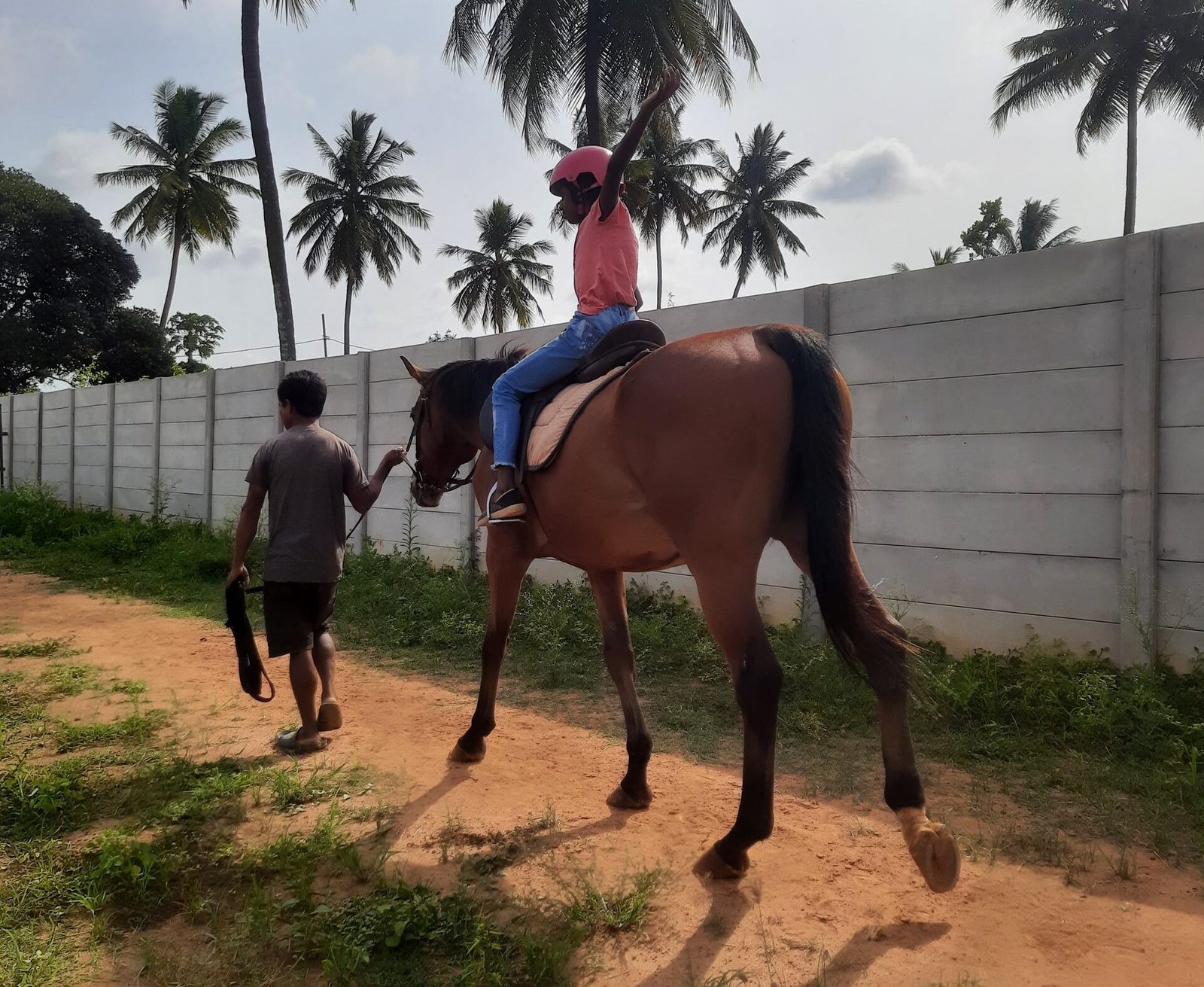
The Vagal Nerve and Horse-back Riding
Many neurodivergent individuals – autistic children, children with ADHD, anxious children, individuals with cerebral palsy, people with depression – live with low vagal tone. The vagus nerve is your brake pedal. Dr. Stephen Porges calls it the nerve of safety. When it is active, you can make eye contact, digest, sleep, handle disappointment. In neurodivergent individuals who lack co-regulation that brake stays weak. Such individuals tend to stay in fight-flight mode.
A horse is a co-regulator that humans cannot replicate. Studies have proven that movement while seated on horseback provides vagal nerve stimulation in a manner that no other machine or physical exercise can replicate.
The gait of a horse is known to be similar to the gait of a human, enabling riders to develop muscle tone and enhanced upper body balance, enabling ‘Proprioception’ – the neurological ability of the body to sense movement and position.
Equine-Assisted Therapy (EAT) has been recognized in the medical and mental health field by most major countries and has been in practice since the early ’70s.
How Equine Assisted Therapy works
Movement that reminds the brain how to walk
Co-regulated breathwork
A heart that steadies yours
A horse at a walk gives a rider 90-110 three-dimensional movements per minute – the exact rhythm of human walking. For a child with poor balance or motor skills, this is not exercise. It is the brain being given its own forgotten pattern. This is why Gabriels et al., 2015, in a randomized trial of 116 children with autism, found significant improvements in irritability and social communication after 10 weeks of therapeutic riding.
Horses breathe 8-12 times a minute. We under stress breathe 20+. A horse has the ability to help breath regulation in humans around it resulting in vagal stimulation without instruction.
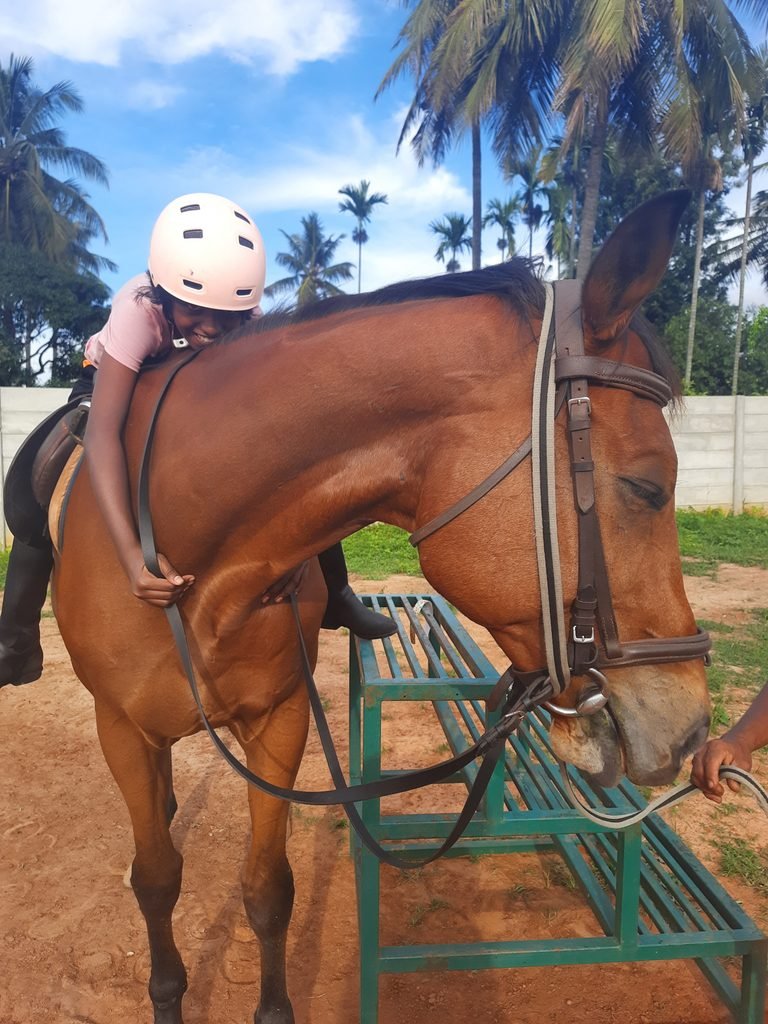
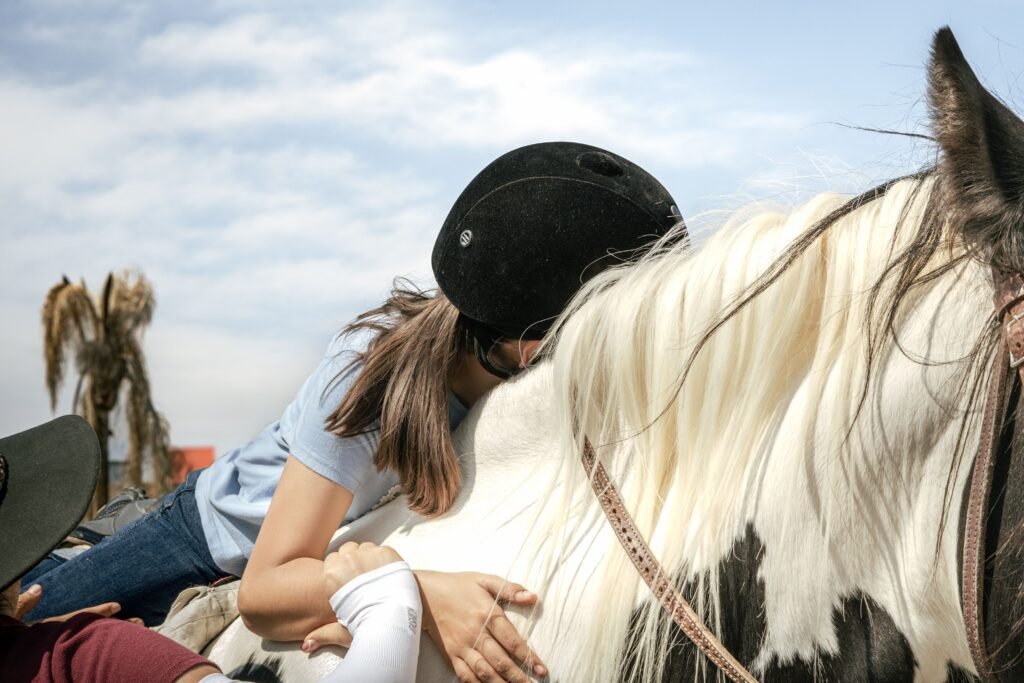
A horse’s heart is five times larger than ours. Its resting beat is 28-40 bpm. When a child rests forward and breathes with a horse, their Heart Rate Variability – the measure of vagal tone – begins to rise and sync. Cortisol drops. Oxytocin rises. Parents say “he calmed down.” Physiologically, his ventral vagus came back online.
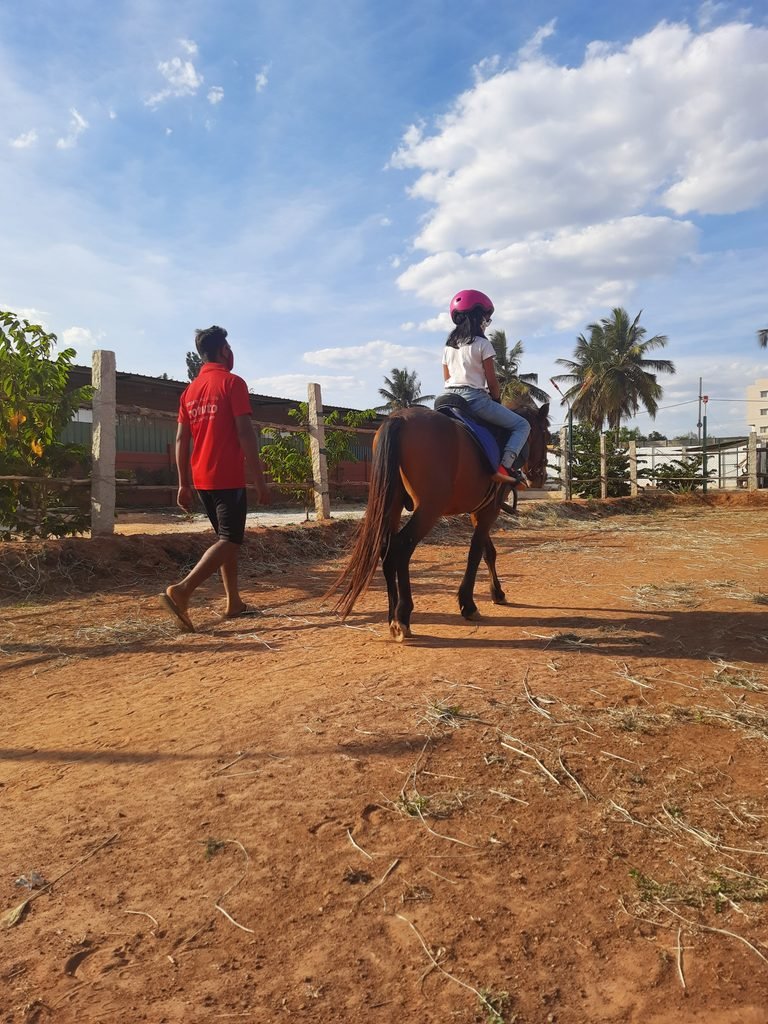
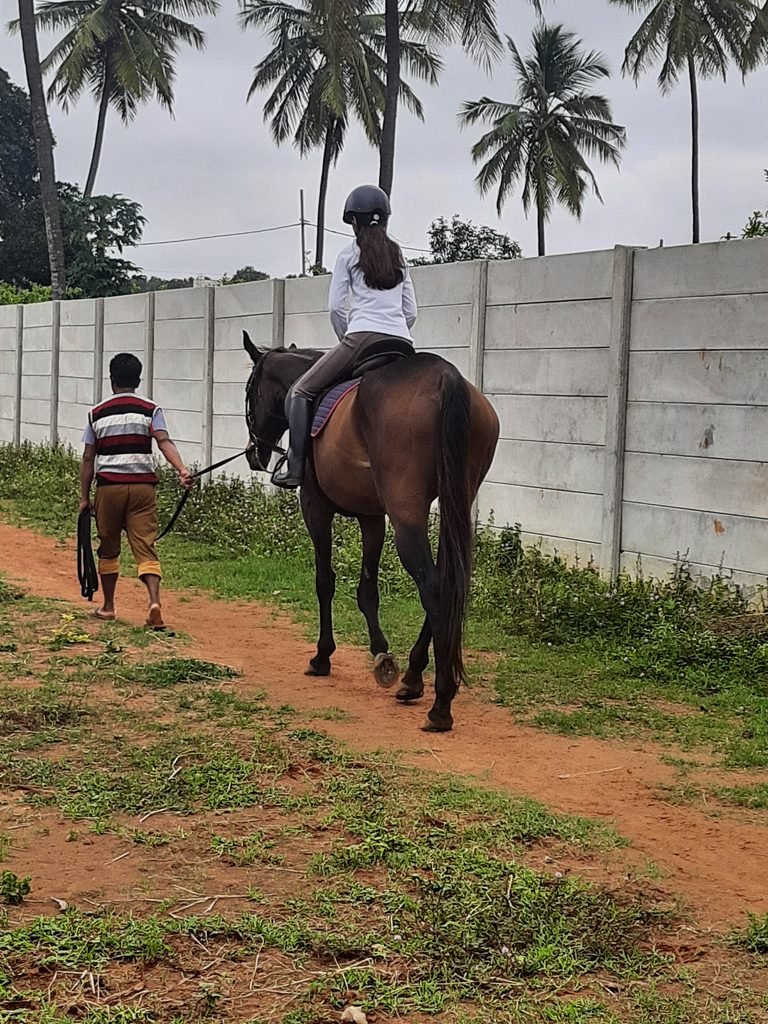
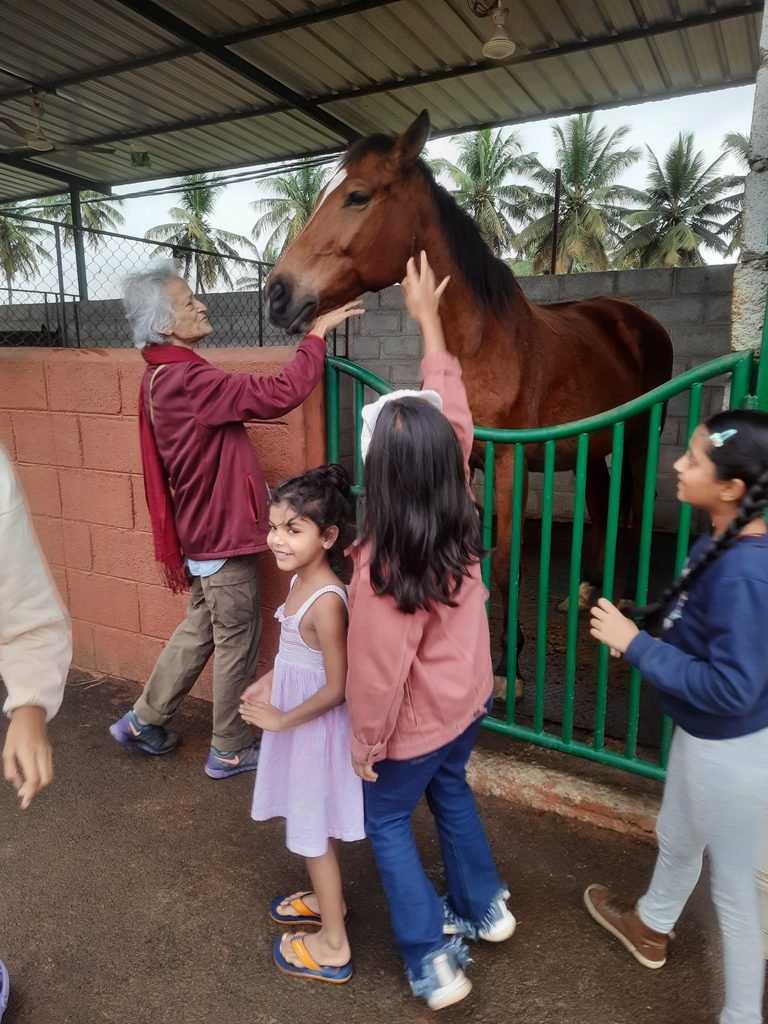
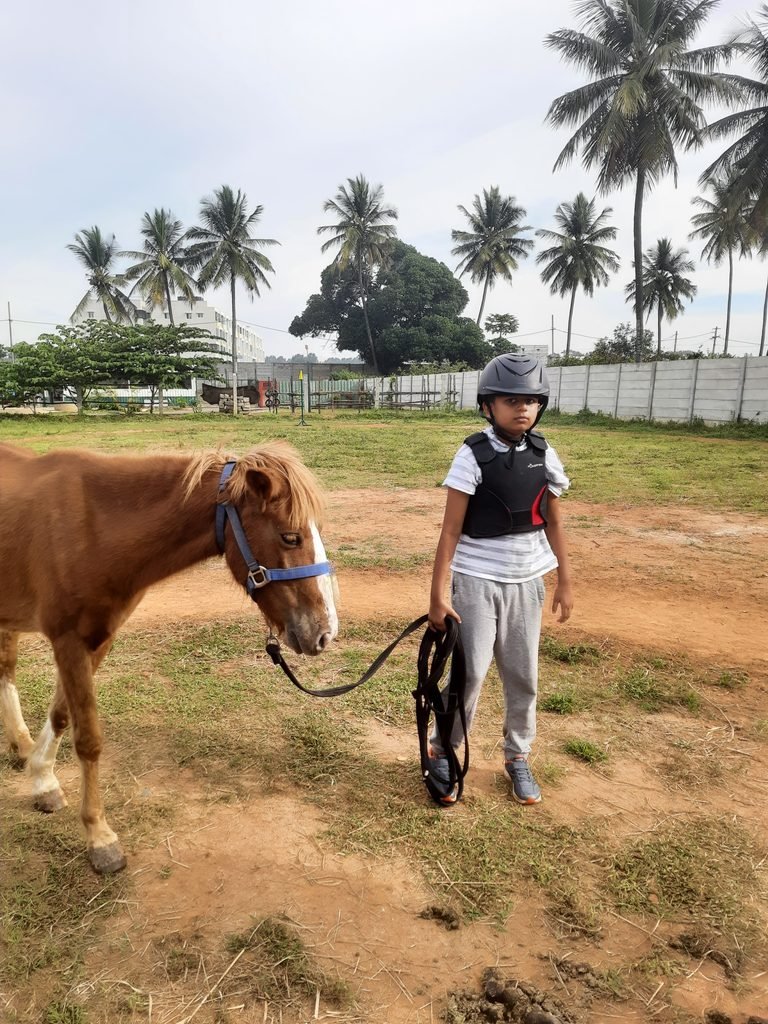
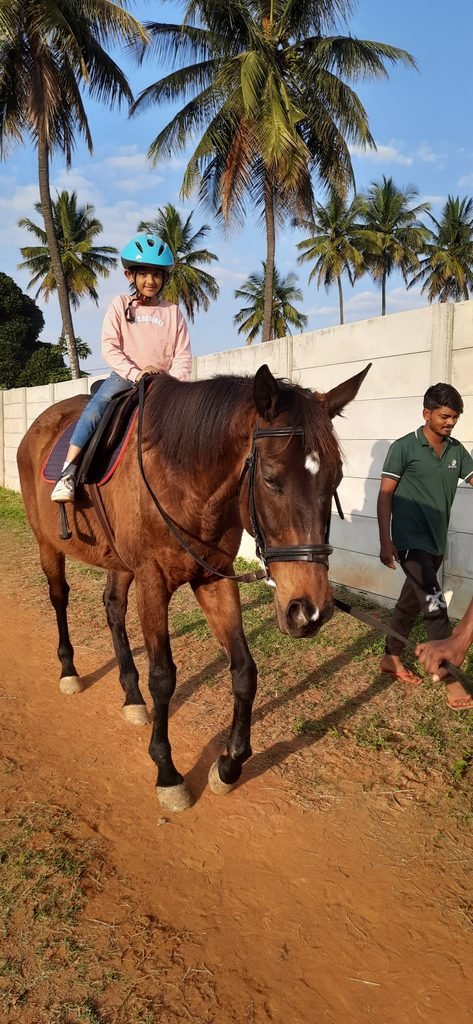
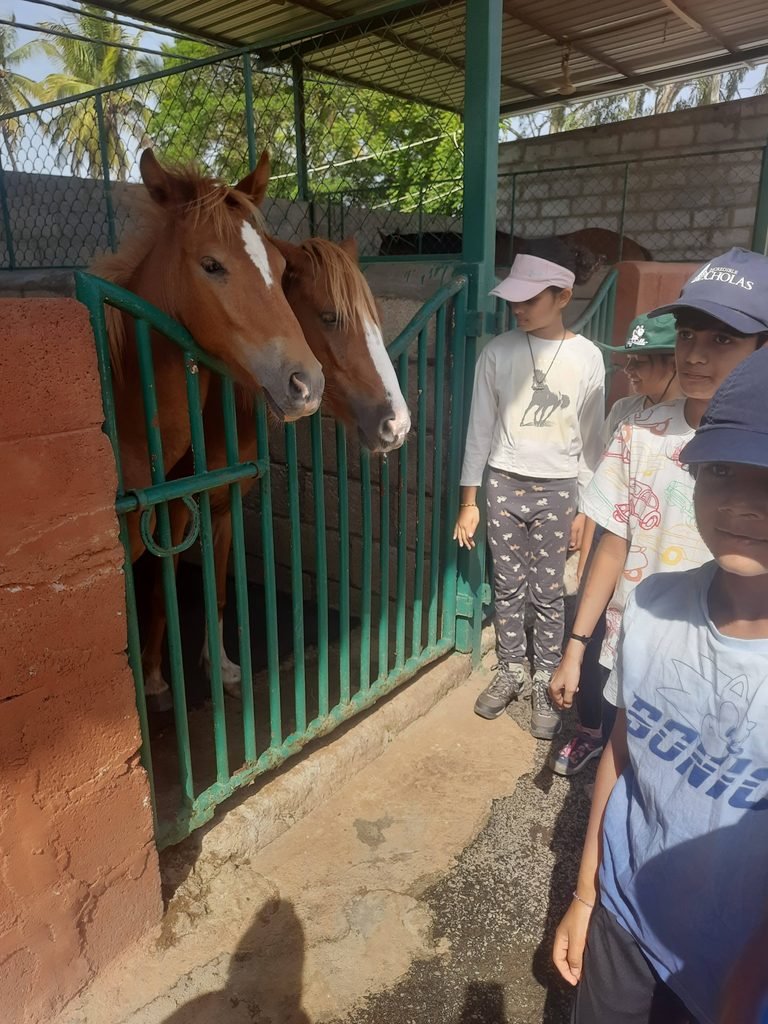
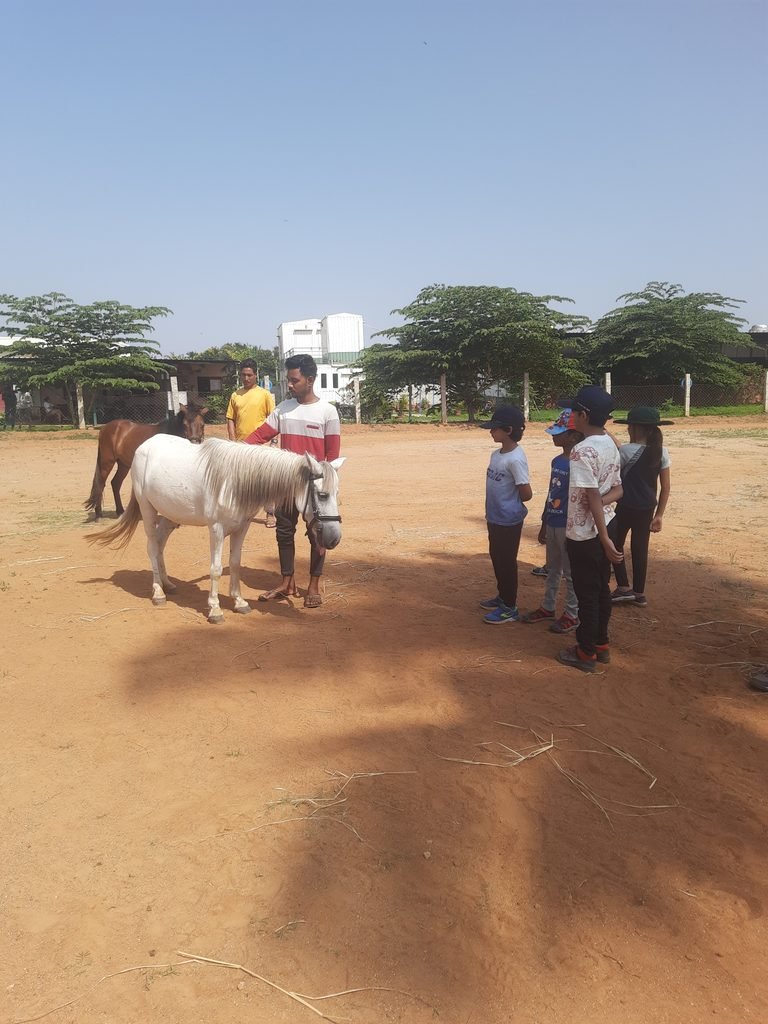
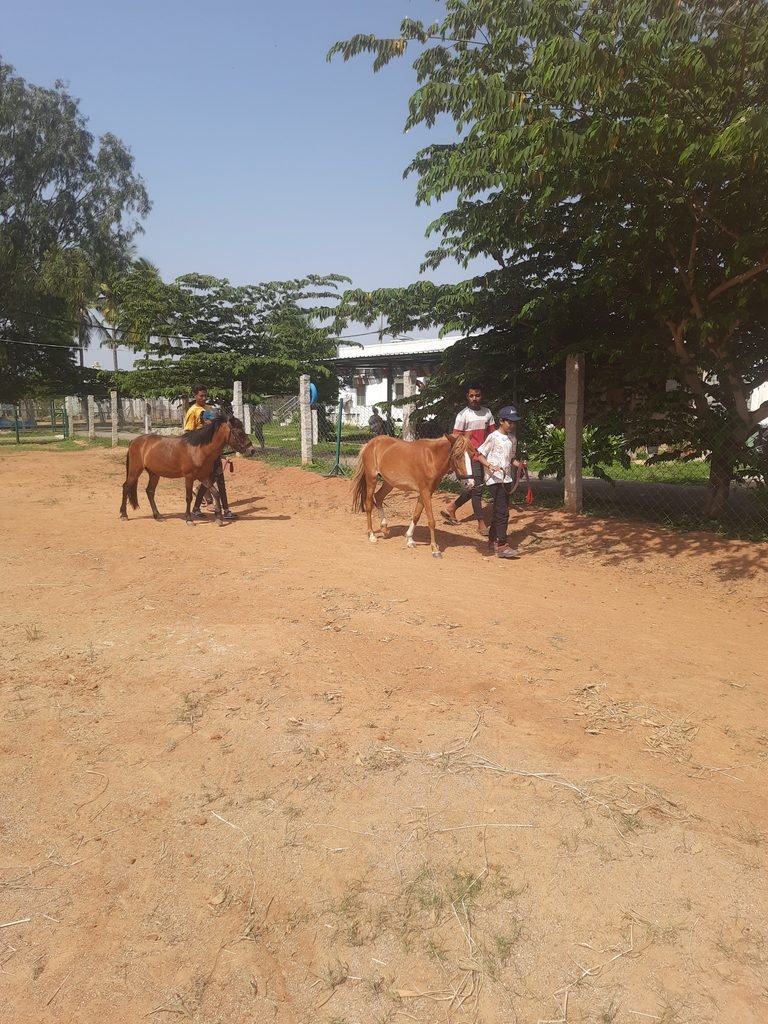
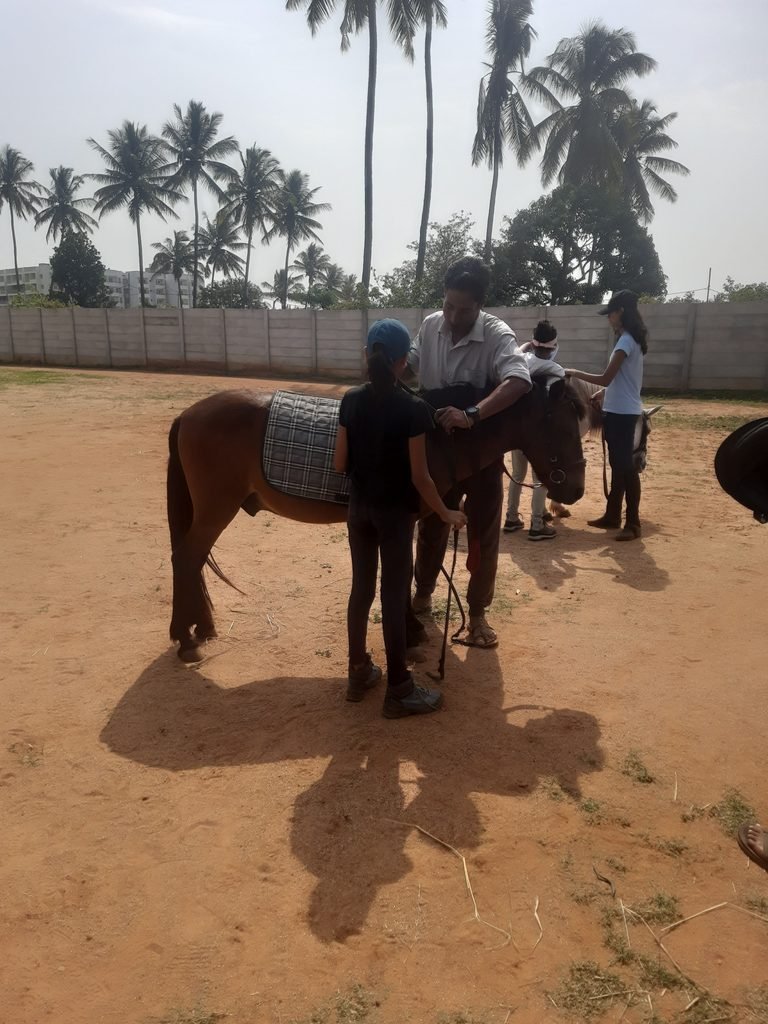
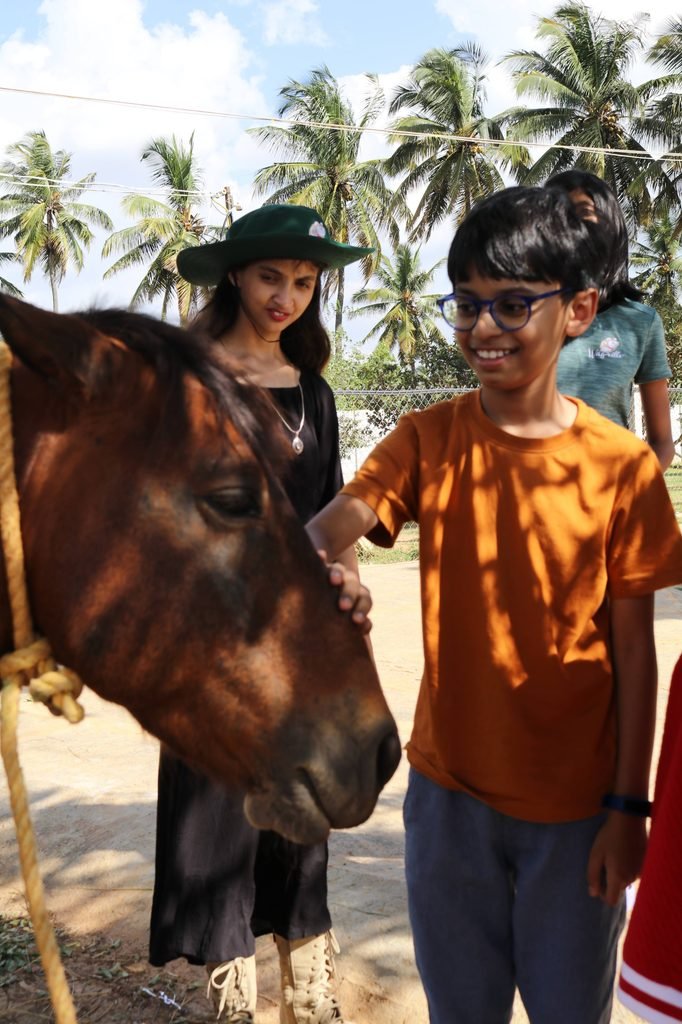
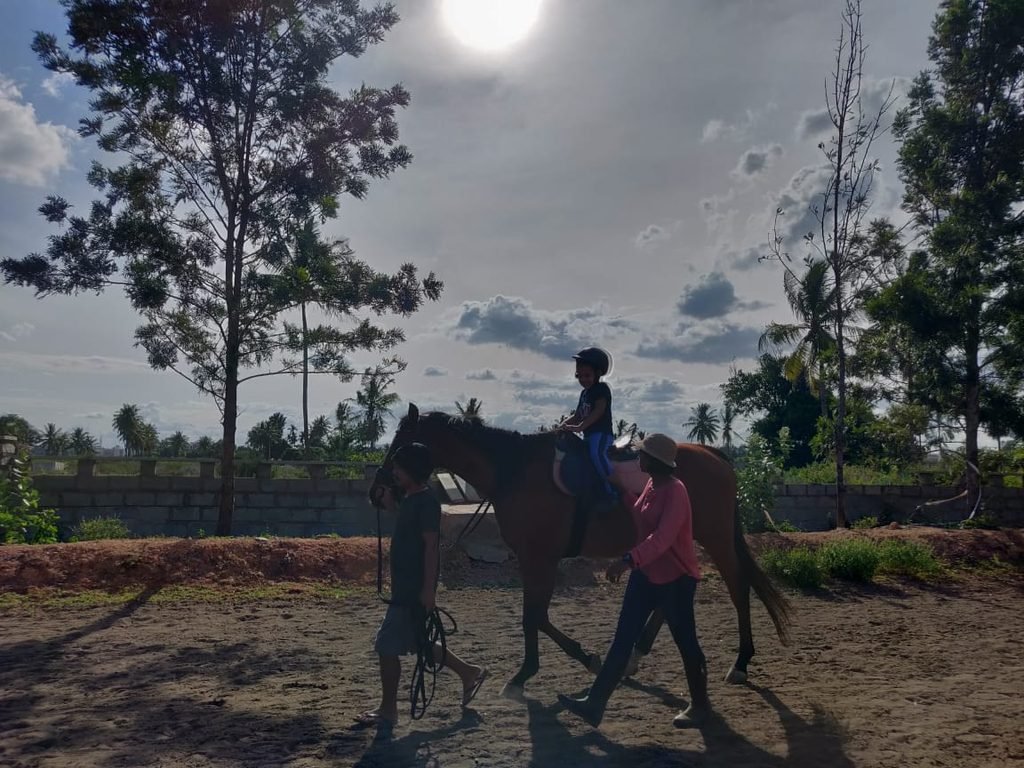
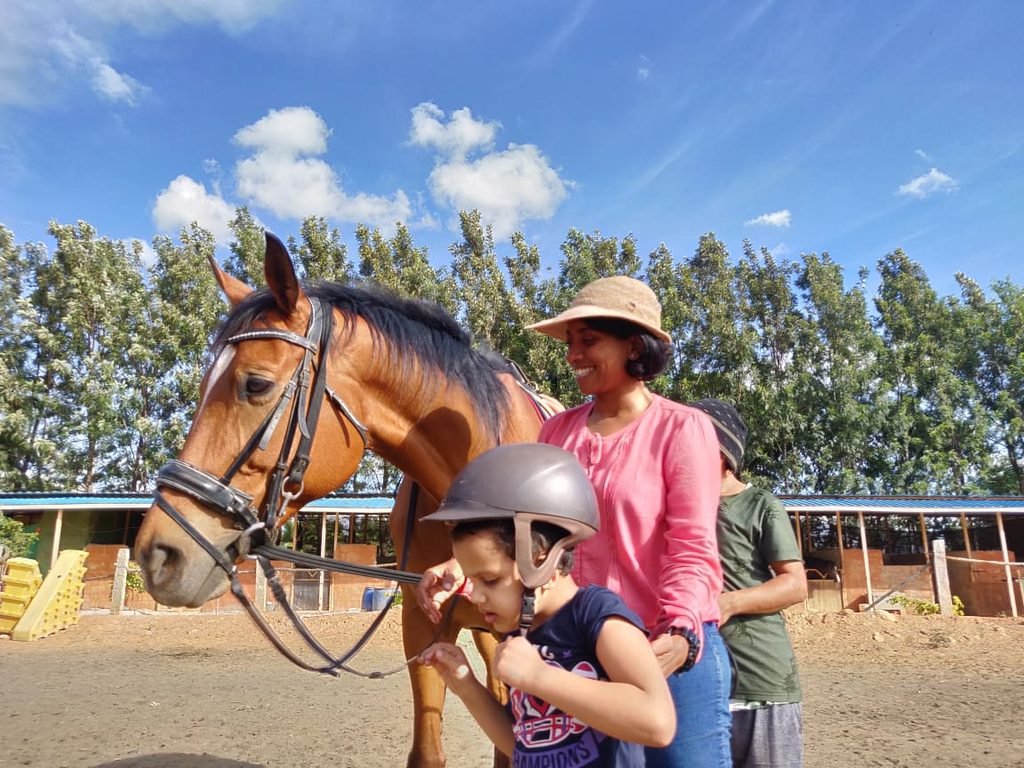
We don’t do just joyrides. Our Therapeutic riding sessions are around 30-40 min each, with at least 2 sessions recommended per week. The activities include riding on horseback with assistance, horseback activities to improve cognition, balance, proprioception, as well as groundwork which includes grooming, leading, breathing together while creating various forms of sensory input. Our certified instructors track focus, sitting tolerance, eye contact that is not forced – not just riding skills. We also work with parents / school teachers to co-regulate at home / school – because the return to animals has to continue beyond the farm.